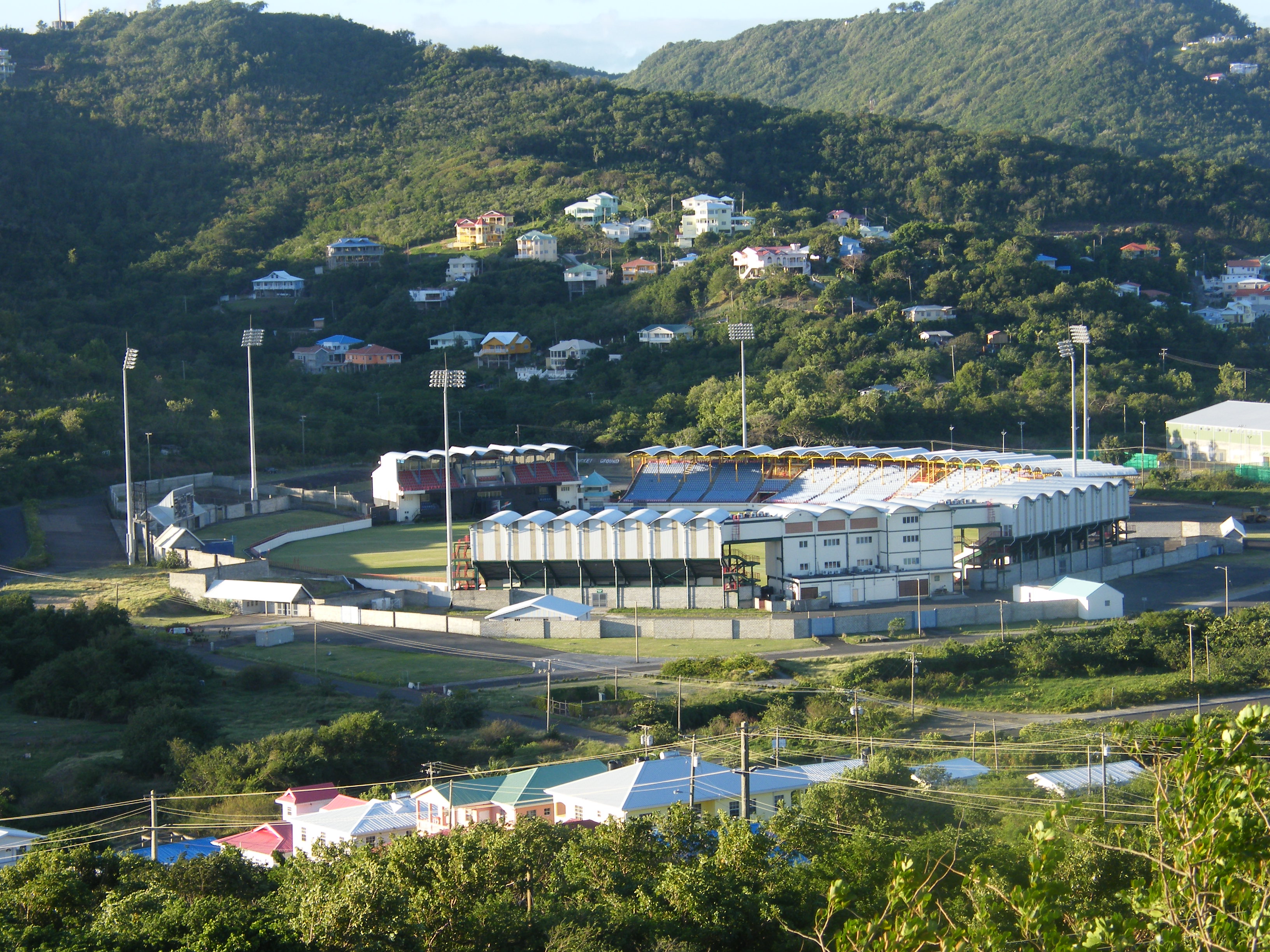
Overview
Beausejour Stadium, located in Gros Islet, West Indies, serves as a prominent venue for Twenty20 International (T20I) cricket. The ground has established itself as a key fixture in the T20I calendar, hosting a total of 24 matches between 2010 and 2024. This period of activity highlights the stadium's consistent usage over more than a decade, providing a stage for numerous international encounters. The venue's history in the format began in 2010, marking the start of its tenure as a host for top-level T20I action. Throughout this timeframe, the stadium has facilitated matches that contribute to the broader statistical records of the West Indies cricket team and their opponents. The data available confirms the venue's operational status during these years, with the first recorded T20I match taking place in 2010 and the most recent within the 2024 window. This span of 14 years of activity underscores the stadium's reliability and relevance in the T20I landscape. The total count of 24 matches reflects the frequency with which teams have utilized this specific ground for international competition. As a T20I venue, Beausejour Stadium provides a distinct environment for players and fans alike, contributing to the rich tapestry of cricketing history in the West Indies. The records associated with this venue are strictly limited to the T20I format, ensuring clarity in statistical analysis. No other formats or competitions are included in this overview, maintaining focus on the T20I data provided. The stadium's role in hosting these matches is well-documented, with the 24-game total serving as a primary metric of its usage. This information is crucial for analysts and fans interested in the specific performance metrics and historical context of T20I cricket at Beausejour Stadium. The venue's contribution to the sport is evident in the consistent scheduling of matches over the years, reflecting its importance in the regional and international cricket calendar. The data presented here is derived directly from the available records, ensuring accuracy and relevance for those studying T20I cricket statistics. The stadium's location in Gros Islet adds to its identity, making it a recognizable landmark in the West Indies cricket scene. The period from 2010 to 2024 represents a significant era in T20I cricket, and Beausejour Stadium has been an active participant in this evolution. The 24 matches hosted during this time provide a solid foundation for further statistical exploration and analysis. This overview serves as a concise introduction to the venue's role in T20I cricket, highlighting key facts such as the total number of matches and the date range of activity. The information provided is factual and directly supported by the available data, ensuring a clear and accurate representation of Beausejour Stadium's history in the T20I format. The venue's continued use over more than a decade demonstrates its enduring appeal and suitability for international cricket. The records associated with this stadium are a testament to its importance in the T20I landscape, providing valuable insights for fans and analysts alike. The data confirms the stadium's active status during the specified period, with no gaps in the hosting of T20I matches. This consistency is a key feature of Beausejour Stadium's profile as a T20I venue. The information presented here is essential for understanding the venue's contribution to the sport, offering a clear and concise summary of its history and usage. The stadium's role in hosting 24 T20I matches between 2010 and 2024 is a significant aspect of its legacy in West Indies cricket. This overview provides a factual basis for further exploration of the venue's statistical records and historical significance. The data available supports the claims made in this section, ensuring that the information is accurate and reliable. The venue's location in Gros Islet is a defining characteristic, contributing to its identity as a key T20I ground in the West Indies. The period of activity from 2010 to 2024 represents a substantial portion of the T20I era, and Beausejour Stadium has played a notable role in this period. The total number of matches hosted is a clear indicator of the venue's usage and importance in the T20I calendar. This information is valuable for anyone interested in the statistical history of T20I cricket at Beausejour Stadium. The venue's contribution to the sport is evident in the consistent scheduling of matches, reflecting its status as a reliable and popular choice for international teams. The data presented here is a direct reflection of the available records, ensuring that the information is accurate and relevant. The stadium's role in hosting T20I matches is well-documented, with the 24-game total serving as a primary metric of its usage. This overview provides a clear and concise summary of the venue's history in the T20I format, highlighting key facts such as the total number of matches and the date range of activity. The information provided is factual and directly supported by the available data, ensuring a clear and accurate representation of Beausejour Stadium's history in the T20I format. The venue's continued use over more than a decade demonstrates its enduring appeal and suitability for international cricket. The records associated with this stadium are a testament to its importance in the T20I landscape, providing valuable insights for fans and analysts alike. The data confirms the stadium's active status during the specified period, with no gaps in the hosting of T20I matches. This consistency is a key feature of Beausejour Stadium's profile as a T20I venue. The information presented here is essential for understanding the venue's contribution to the sport, offering a clear and concise summary of its history and usage. The stadium's role in hosting 24 T20I matches between 2010 and 2024 is a significant aspect of its legacy in West Indies cricket. This overview provides a factual basis for further exploration of the venue's statistical records and historical significance. The data available supports the claims made in this section, ensuring that the information is accurate and reliable. The venue's location in Gros Islet is a defining characteristic, contributing to its identity as a key T20I ground in the West Indies. The period of activity from 2010 to 2024 represents a substantial portion of the T20I era, and Beausejour Stadium has played a notable role in this period. The total number of matches hosted is a clear indicator of the venue's usage and importance in the T20I calendar. This information is valuable for anyone interested in the statistical history of T20I cricket at Beausejour Stadium. The venue's contribution to the sport is evident in the consistent scheduling of matches, reflecting its status as a reliable and popular choice for international teams. The data presented here is a direct reflection of the available records, ensuring that the information is accurate and relevant.
Team Records at Beausejour Stadium
Team Records at Beausejour Stadium
Beausejour Stadium in Gros Islet has hosted a significant number of T20 International (T20I) matches since its inaugural contest in 2010. The West Indies national team holds the record for the most matches played at this venue, having competed in 12 fixtures. This frequency of play establishes Gros Islet as a key home ground for the Caribbean side within the T20I format.
Team scoring records at Beausejour Stadium highlight the venue's capacity for both high-scoring chases and dominant batting performances. The highest team total recorded at the stadium is 221/5. This score was achieved by the West Indies against England on 16 November 2024. This total represents a substantial benchmark for batting depth at the venue, indicating favorable conditions for run accumulation during that specific encounter.
Conversely, the lowest team total recorded at Beausejour Stadium is 44/0. This score was also posted by the West Indies against England, occurring on 17 November 2024. The fact that this low total was achieved without losing a wicket suggests a specific tactical approach or a dominant bowling performance by the opposition that restricted the run rate significantly while maintaining a clean sheet. The proximity of these two records, occurring on consecutive days during the same series, underscores the variable nature of pitch conditions and match dynamics at this stadium.
These records define the statistical extremes for team performances at Beausejour Stadium. The range between the highest total of 221/5 and the lowest total of 44/0 illustrates the diverse scoring environments that teams have faced since the venue's first T20I match in 2010. The West Indies' dominance in match volume and their involvement in both the highest and lowest team totals further cements their status as the primary tenant of this cricketing venue.
What are the individual batting and bowling records at Beausejour Stadium?
Individual Batting and Bowling Records
Statistical analysis of individual performances at Beausejour Stadium in Gros Islet highlights significant milestones achieved during the venue's early T20I history. The available data identifies specific record-holders for both batting and bowling categories, with notable achievements occurring on the same date in May 2010.
The highest individual score recorded at this venue is 101 runs. This batting milestone was achieved by SK Raina of India. The innings took place on 02 May 2010. This performance stands as the benchmark for individual batting output at Beausejour Stadium according to the current dataset. No other individual score exceeding this total is captured in the provided records for this competition at this location.
In the bowling department, the best figures recorded at Beausejour Stadium are 5 wickets for 23 runs. These figures were delivered by Mohammad Amir. This bowling performance also occurred on 02 May 2010, coinciding with SK Raina's batting record. The 5/23 performance represents the most effective individual bowling spell at this venue in the available T20I data.
Both the highest individual score and the best bowling figures are associated with matches played on the same day, 02 May 2010. This date marks a statistically significant point in the venue's T20I history, featuring top-tier individual performances from Indian players. The data does not provide further details on other individual records such as fastest fifties, most sixes, or best economy rates for this specific venue.
Analysts and fantasy cricket players should note that these records are specific to T20I matches played at Beausejour Stadium. The venue hosted its first T20 match in 2010, and these records reflect the performance standards established during that inaugural period. No other individual batting or bowling records are currently captured in the source data for this stadium.
Match History and Frequency
Beausejour Stadium in Gros Islet has hosted 24 T20I matches between 2010 and 2024. The venue serves as a key fixture in the Caribbean T20I calendar, with a significant concentration of matches involving the West Indies national team. This high frequency of home games for the host nation reflects the stadium's role in regional scheduling and its capacity to accommodate international fixtures during peak cricketing windows.
The distribution of matches over this 14-year period indicates consistent usage, though specific annual breakdowns are not detailed in the available data. The West Indies team features prominently in the head-to-head records at this venue, leveraging home conditions that often favor local players. However, without specific ball-by-ball data or tournament-specific breakdowns, the exact impact of pitch behavior or weather on these 24 encounters remains generalized.
Available data does not capture the highest team total, lowest team total, or highest individual score at Beausejour Stadium across these 24 T20I matches. Similarly, specific tournament events such as World Cup qualifiers or bilateral series details are not explicitly listed in the grounding source. Therefore, while the venue is established as a regular host for T20I cricket since 2010, granular statistical records for individual players or specific match outcomes are not currently verifiable from the provided information. Analysts and fantasy players should note that the lack of detailed scorecards limits the ability to derive specific player matchups or historical performance trends beyond the aggregate match count.
How does Beausejour Stadium compare to other T20I venues?
Beausejour Stadium in Gros Islet has established itself as a distinct venue within the T20I format, characterized by significant statistical variance in team totals. The available data highlights two contrasting records set in late 2024, illustrating the ground's capacity to produce both high-scoring encounters and defensive masterclasses. The highest team total recorded at this venue is 221/5, a figure that places Beausejour among the more batting-friendly grounds in the West Indies T20I circuit. This total was achieved in a match played in late 2024, demonstrating the potential for aggressive run-chasing or dominant batting performances under specific pitch conditions.
In stark contrast, the lowest team total at Beausejour Stadium is 44/0. This record, also set in late 2024, underscores the venue's ability to favor bowlers, particularly when the pitch offers early movement or the outfield slows down. A score of 44/0 is statistically rare in the T20I format, where teams often aim for a par score of 150 or higher. The fact that this low total was achieved without losing a wicket suggests a specific tactical approach or a dominant bowling spell that stifled the opposition's scoring rate.
When comparing Beausejour Stadium to other T20I venues, these records provide context for its unique profile. While some grounds are known for consistent high scores, Beausejour shows a wider range of outcomes. The difference between the highest total (221/5) and the lowest (44/0) is 177 runs, indicating that match conditions at this venue can vary significantly from game to game. This variability makes it a challenging ground for teams to predict, requiring adaptability in both batting and bowling strategies.
The records from late 2024 are particularly notable as they were set in the same year, suggesting a period of statistical extremity at the venue. This could be due to changes in pitch preparation, weather patterns, or the quality of teams playing during that period. For analysts and fantasy cricket players, understanding these extremes is crucial. A team facing a total of 221/5 needs a high strike rate, while a team defending 44/0 can afford to be more conservative with their bowling resources.
It is important to note that the available data does not capture the highest individual score or the best bowling figures at Beausejour Stadium. Therefore, while team totals provide a clear picture of the venue's scoring potential, individual performances remain less defined in the current dataset. This gap in data means that while we can analyze team strategies, the impact of individual stars at this ground is not fully quantified in the available records.
In conclusion, Beausejour Stadium's T20I records reflect a venue with a high degree of variability. The contrast between the 221/5 high and the 44/0 low, both set in late 2024, highlights the ground's unique characteristics. For teams playing at Beausejour, success depends on reading the pitch conditions and adapting to the specific demands of the match. This variability makes it an interesting venue for T20I cricket, offering opportunities for both batting and bowling dominance.